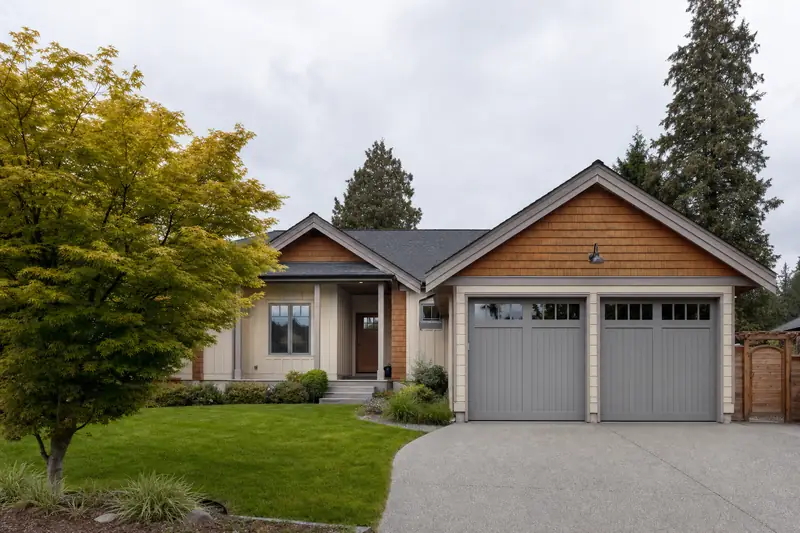
Locally owned.Family run.30+ years.
Garage door safety
Short answer: yes, and more than almost anything else attached to your house. Not because they fail often, but because of what they are holding when they do.
A double garage door weighs somewhere between 130 and 180 kilos. The opener does not lift that - it could not. The springs do. All the opener does is guide a door that the springs have already made almost weightless. Which means that at any given moment, sitting quietly above your car, there is a steel coil storing enough energy to lift a small piano.
Torsion springs sit on a horizontal steel shaft above the door opening. They wind up as the door comes down. When one breaks, it usually stays on the shaft - you get a loud bang and a door that will not lift, which is alarming but rarely injures anyone.
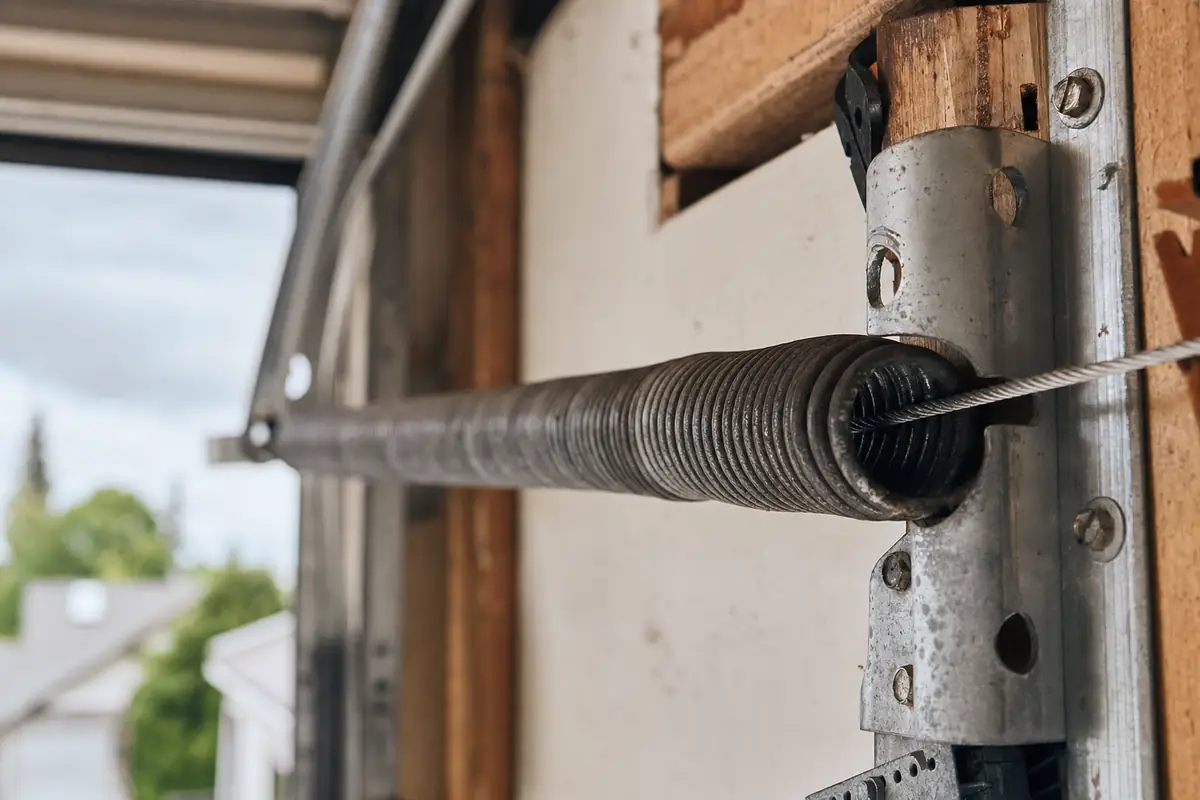
Extension springs run along the horizontal tracks at either side, stretching as the door closes. These are the ones with the reputation. When an old extension spring lets go, it can travel - across the garage, through drywall, into whatever is parked underneath.
If your extension springs have no safety cable running through them, that is the single most useful thing to fix on your door.
A safety cable threads through the middle of an extension spring and is anchored at both ends. When the spring breaks, the cable catches the pieces. They cost very little and they are the difference between a bang and a hole in something. Look along your tracks - if you see a spring with no cable through it, call someone.
Do not pull the emergency release on a door with a broken spring while it is part-open. Without the spring there is nothing holding the weight, and the release hands all of it to you at once. Keep people and cars clear of the opening and call someone.
We are generally happy to tell people what they can handle themselves. Photo eyes, remotes, lubrication, even a roller - go ahead. Springs are the one place we stop.
Winding a torsion spring means holding several hundred foot-pounds of torque on two steel bars, in a controlled sequence, with your face somewhere near it. The bars have to be the correct diameter for the cone. If one slips, it moves faster than you can. The tooling matters, the technique matters, and there is no partial credit.
It is also not an expensive repair by the standards of house maintenance, which makes the risk calculation fairly one-sided.
Standard springs are rated around 10,000 cycles. High-cycle springs run to 25,000 or more and cost meaningfully less than twice as much - so if your garage is how you get into the house, they are usually the better arithmetic. We will tell you which side of that line you are on.
Thirty-plus years of doors across Greater Vancouver. Urgent calls come first.
Thirty-plus years of doors, written down. Straight answers on springs, openers and what a door actually costs.
 Garage door safety
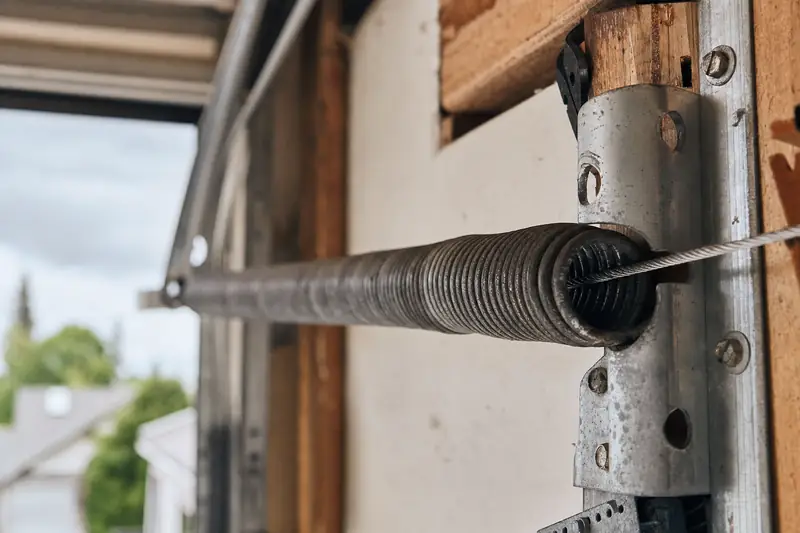
Why extension springs are the most dangerous part of an older door.
Read the guide →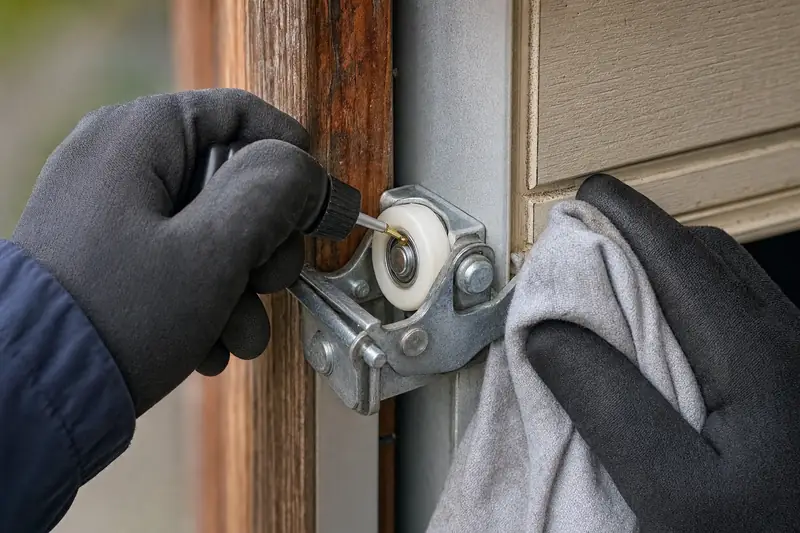 Maintenance
The checks worth doing yourself, and the ones to leave alone.
Read the guide → New doors
Why full-view aluminium keeps turning up on West Coast homes.
Read the guide →
Locally owned.
Family run.
30+ years.
Request a callback
Angie picks these up personally. Tell us what the door is doing and we’ll get back to you as quickly as we can. Outside hours we pick it up first thing the next working morning.
That did not send.
Something went wrong at our end, and we would rather tell you than pretend. Please call 604-230-3756 or email info@jmacdoors.com and we will pick it up.