Locally owned.Family run.30+ years.
Spring changes
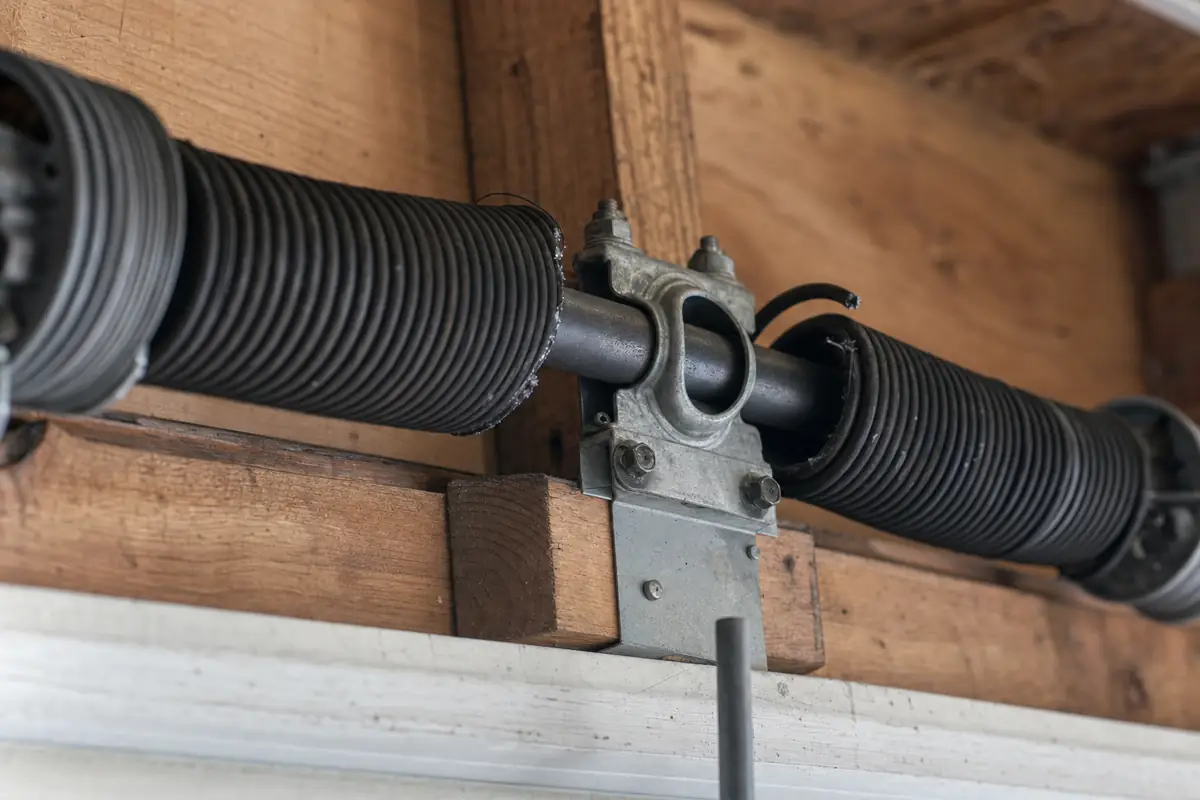
A torsion spring carries the entire weight of your door. When it goes, the door will not lift and the opener cannot save it.
A torsion spring stores enough energy to break bones, and a winding bar that slips takes the whole load. If the door is stuck part-way, keep people and cars clear of the opening and call us. This is the one repair we ask people never to attempt.
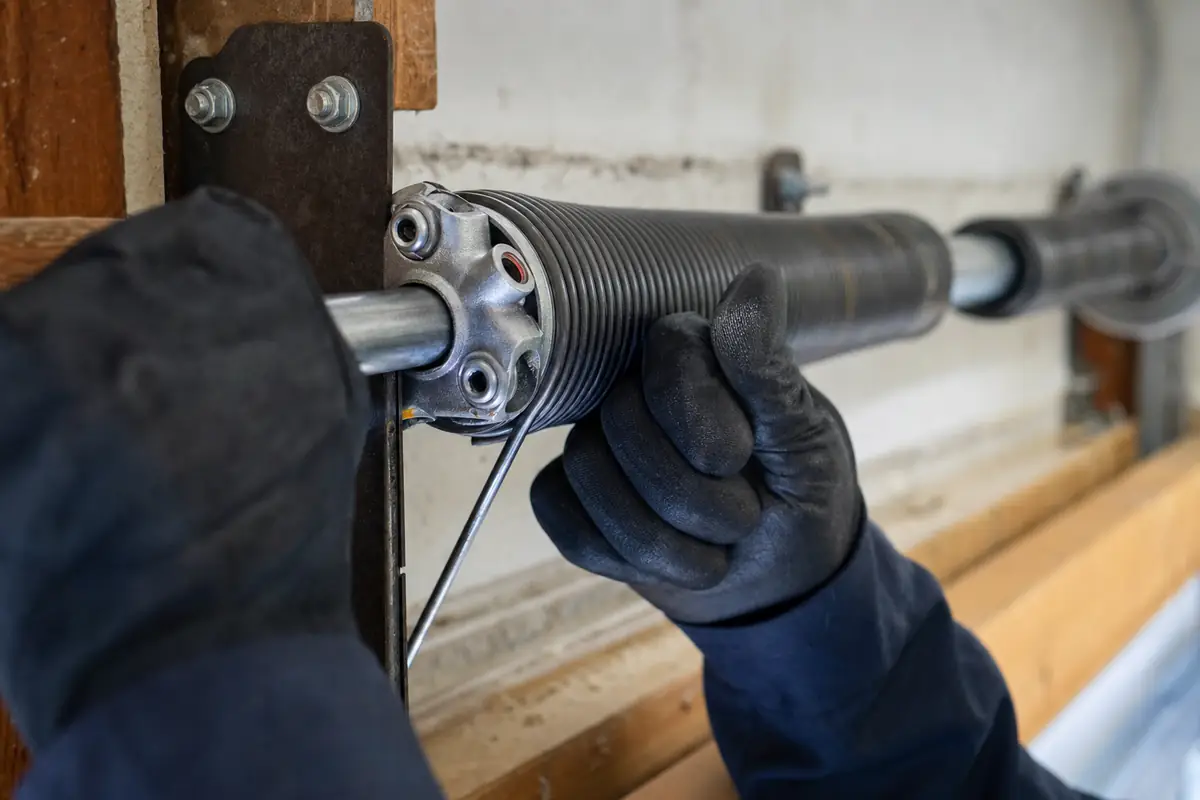
On a typical two-car door that is well over a hundred kilos, held under tension by a steel coil. When it lets go, that energy has to go somewhere - which is why the opener suddenly cannot lift a door it moved perfectly well yesterday.
Almost always a torsion spring letting go, often overnight or in a cold snap.
Or it feels impossibly heavy by hand. The spring, not the opener, does the lifting.
Look at the shaft above the door. A two-inch gap means a broken spring.
Openers guide a balanced door, they do not lift a dead weight. Stop using it.
One side lifting before the other points at a failed cable or an unbalanced pair.
A dangerous one. Keep people and cars clear and call us.
A pair installed on the same day has taken the same number of cycles. When one fails the other is close behind.
That twists the door in the opening and wears the rollers, tracks and opener.
After fitting we set the tension and test the door by hand at several heights.
Auto-reverse and the photo eyes are checked before we leave.
“A spring is the one part of your door that can hurt you. Please let us do it.”Jim McCormack · Founder
We carry torsion springs in the common sizes, so most changes finish on the first visit.
Most residential torsion springs last between 10,000 and 15,000 cycles. One cycle is once up (open) and once down (closed) - so a household that comes and goes four times a day gets through them faster than the number suggests. It is why two doors on the same street, fitted the same week, do not fail the same year.
Not every door has torsion springs above the opening. If yours does not, have a look at the sides of the door instead - you may have extension springs, and they tell you plenty just by looking.
On a two-spring door, yes, and we will explain why on site. They have the same age and cycle count, so replacing one leaves you paying a second call-out shortly after.
We strongly advise against it. Torsion springs are wound under extreme tension and the tools and technique matter. This is the repair most likely to injure someone.
Most are done within the visit, including rebalancing and testing.
Standard springs are rated between 10,000 and 15,000 cycles - roughly seven to ten years for an average household. High-cycle springs are available if you use the door heavily.
Some lighter doors use a single spring. We will match what your door needs rather than upsell you.
Thirty-plus years of doors, written down. Straight answers on springs, openers and what a door actually costs.
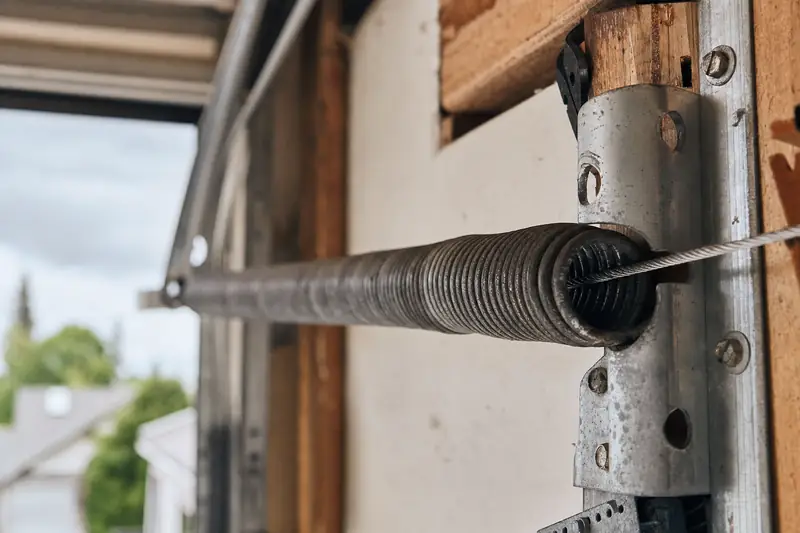 Garage door safety
Why extension springs are the most dangerous part of an older door.
Read the guide →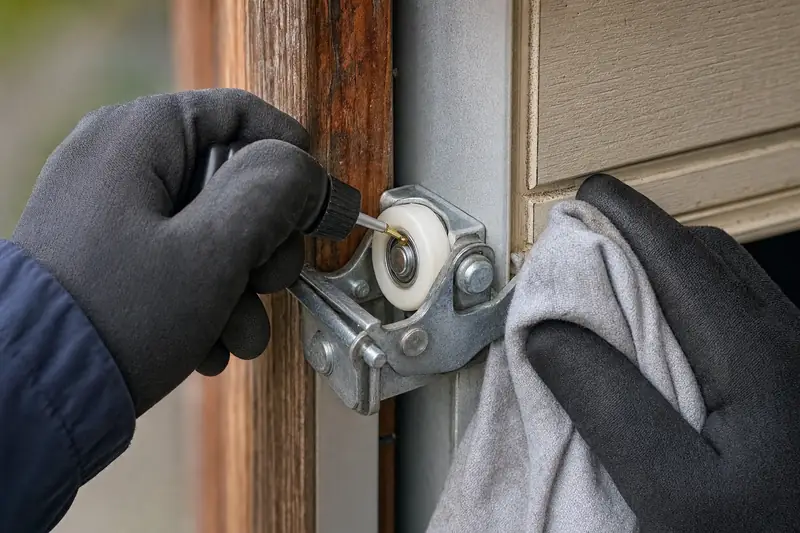 Maintenance
The checks worth doing yourself, and the ones to leave alone.
Read the guide → New doors
Why full-view aluminium keeps turning up on West Coast homes.
Read the guide →
Locally owned.
Family run.
30+ years.
Request a callback
Angie picks these up personally. Tell us what the door is doing and we’ll get back to you as quickly as we can. Outside hours we pick it up first thing the next working morning.
That did not send.
Something went wrong at our end, and we would rather tell you than pretend. Please call 604-230-3756 or email info@jmacdoors.com and we will pick it up.